
Ancient Wisdom and the Twelve Nights of Rauhnächte

I am learning more about ancient traditions that were stamped out by modern religion and society, and one of the most fascinating is the period between December 25 and January 6.
Across many pre Christian European cultures, particularly Germanic and Alpine traditions, this time was known as the Twelve Nights or Rauhnächte. It was understood as a liminal space between years, a pause in the natural rhythm of life. Work slowed. Productivity was not the priority. Stillness, reflection, rest, dreaming, and ritual were culturally recognized and protected.
As modern religious structures and later industrial society took hold, these practices were largely stamped out or absorbed into more rigid frameworks. What was once a collective agreement to slow down became a season filled with expectation, consumption, and pressure to quickly return to normal pace.
What I find most interesting is how the body still responds the same way.
It is widely known that many people feel off after Christmas. Motivation drops. Productivity feels difficult or impossible. There is a strange sense of uncertainty, like we are not quite sure what we are supposed to be doing next.
In a hyper productive society, we do not have language for this experience. We often interpret it as something being wrong with us. But it seems very possible that this feeling exists because humanity has always slowed down during this time. Not because we could not do more, but because we were not meant to.
Can you imagine knowing, without guilt, that there was an entire stretch of time where being slow, calm, and inward was considered good for us.
Maybe nothing is wrong with us at all. Maybe this season is reminding us of something very old.
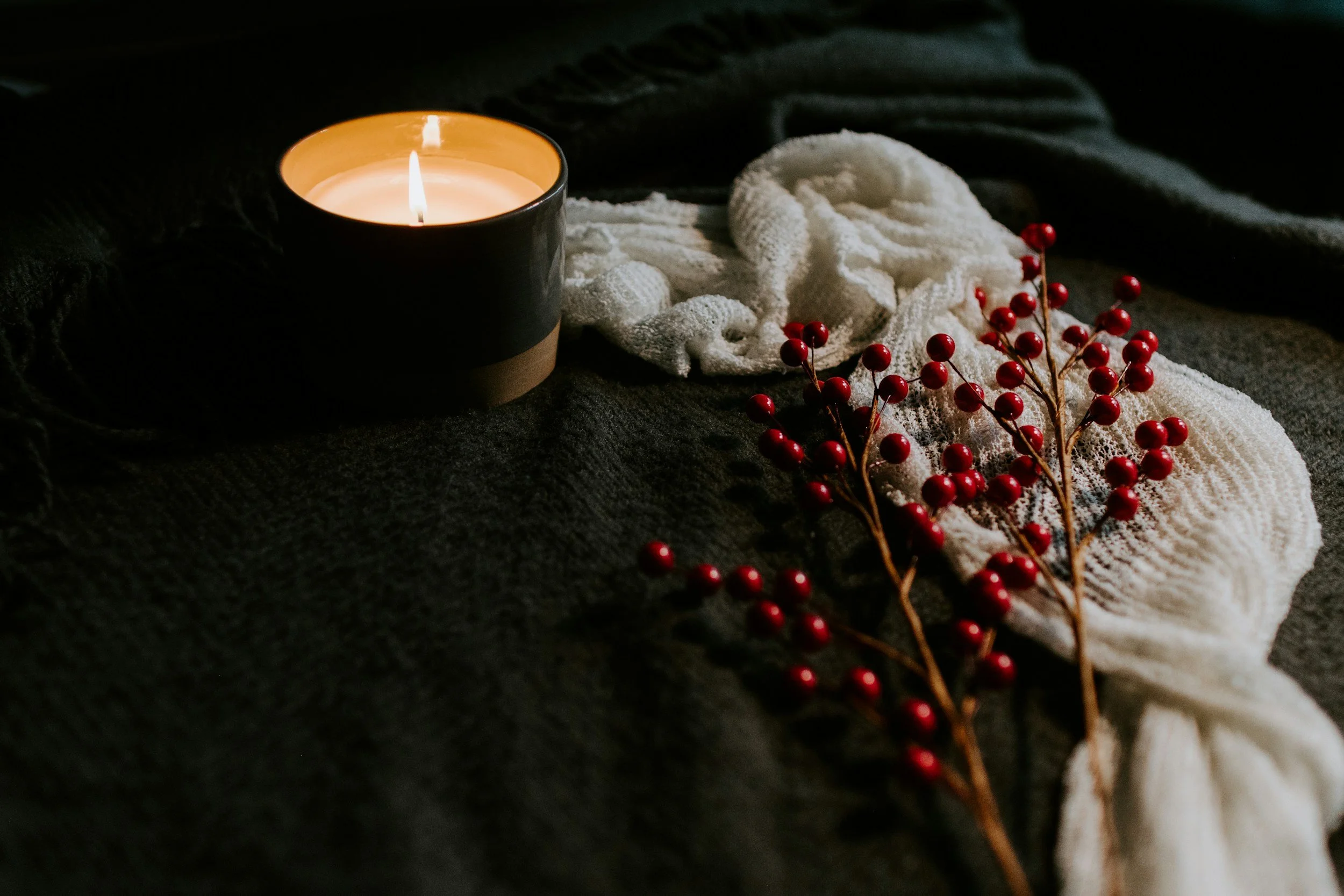
Here is a commonly used ritual during this time, often called the “13 wishes” ritual. It is traditionally practiced during the Rauhnächte, the Twelve Nights beginning on December 25. The ritual is based on the idea that each of these nights corresponds with one month of the upcoming year.
To do the ritual, you write down thirteen wishes for yourself.
The wishes should be written in present tense and focused only on your own life. Each wish is folded so you cannot see what is written.
Each night, for twelve nights, you randomly select one folded wish and burn it without reading it, symbolically releasing it and letting go of responsibility for how or when it will happen.
On the final night, one wish remains unburned. That last wish is the one you open and read, and it represents the intention you actively work toward in the year ahead.